Rajan Kumar
Founder, BiodataBuilderRajan built BiodataBuilder to help millions of Indians create professional marriage biodatas easily. With expertise in Indian matrimonial traditions and 2M+ biodatas created on the platform, his guides cover every regional format, community custom, and modern best practice.
Last Updated:
Marriage Biodata Statistics in India: Comprehensive 2024 Trends
TL;DR - The Quick Summary
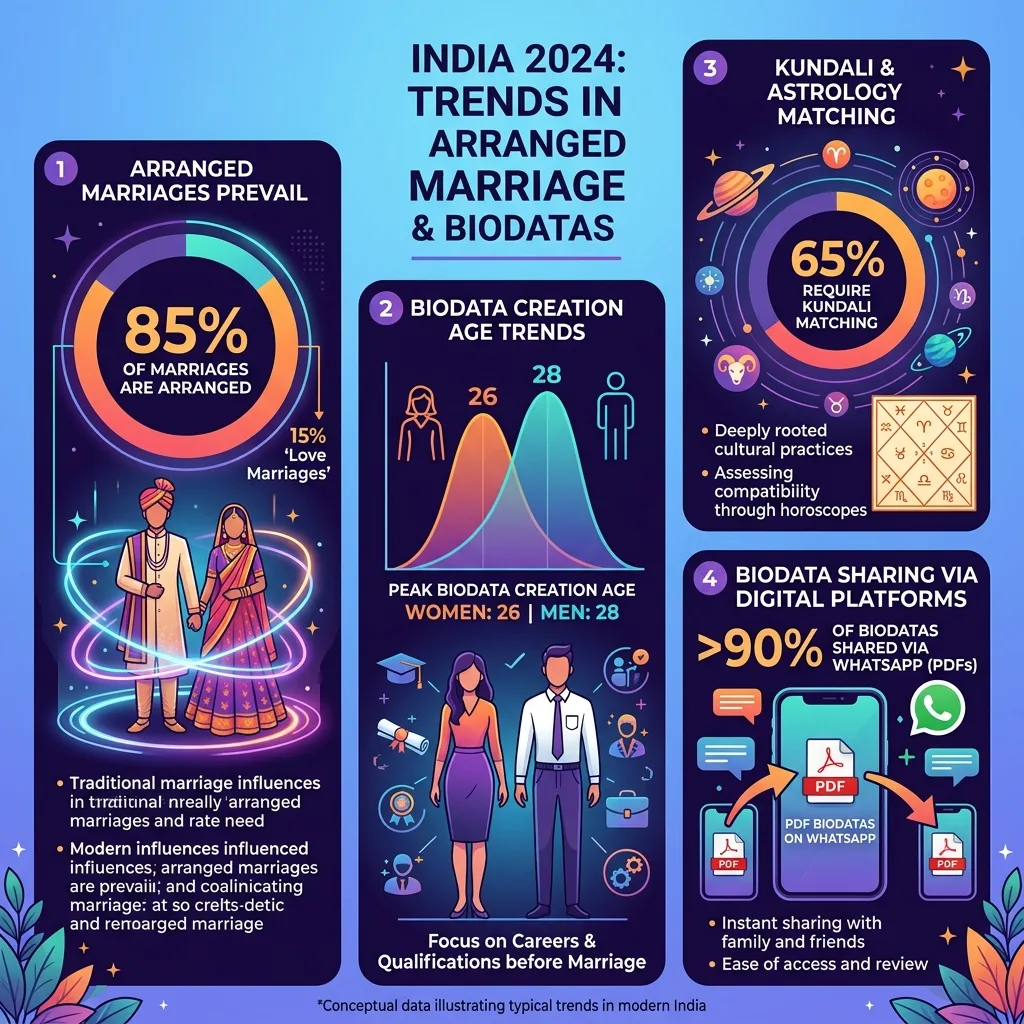
- Arranged Marriages Still Dominate: An estimated 85% of all marriages in India are arranged, making the biodata an indispensable document.
- Peak Age: Women typically start making their biodatas at 26, while men start around 28—a two-year upward shift over the last decade.
- Astrology & WhatsApp: 65% of Hindu families strictly require Kundali matching, and over 90% of biodatas are now shared as PDFs strictly via WhatsApp.
The arranged marriage system in India is undergoing a massive digital transformation. While the core concept of bringing two families together remains culturally entrenched, the methods of connection, the criteria for selection, and the role of the marriage biodata are changing rapidly.
Decades ago, a biodata was a simple, handwritten sheet of paper handed over during a physical family meeting. Today, it is a highly-optimized digital asset, acting as a "first impression" that determines whether a family will even pick up the phone. It is vastly different from a job resume—it carries the weight of caste, astrology, income expectations, and physical appearance.
Based on demographic data, research on Indian religious and social demographics, and trends across major matrimonial platforms, let us explore the statistical reality of how India gets married in 2024.
2. The Hard Numbers (2024 Overview)
Arranged Marriages
Despite modernisation, arranged or "semi-arranged" remains the dominant force in Indian society.
Require Kundali Matching
Among Hindu families, basic astrological compatibility remains a strict precursor to the first meeting.
Average Bio-Creation Age
The average age at which women (26) and men (28) actively start exchanging biodatas.
Shared via WhatsApp
WhatsApp has overwhelmingly replaced physical printouts and email as the primary distribution channel.
3. The Rise of "Self-Arranged" Marriages
A massive trend over the last five years is the shift from strictly parent-arranged marriages to "self-arranged" (or semi-arranged) marriages. Today, nearly 50% of profiles on matrimonial platforms are managed by the individuals themselves rather than by parents or siblings.
This autonomy has fundamentally changed the tone of modern biodatas. Instead of a dry list of facts, modern candidates are moving towards modern templates that highlight personality, hobbies, and lifestyle directly. When individuals drive the process, they prioritize compatibility in lifestyle over purely familial alliances. You can see this clearly in how the "About Me" section has evolved from a single sentence to a full paragraph.
4. Peak Age for Biodata Creation
If you feel like you are creating a biodata later than your parents did, you are entirely correct. The statistics show a steady upward shift of approximately two years over the past decade.
Currently, the peak age for a girl's biodata creation sits at 26 years old, up from 24 in the early 2010s. For a boy's biodata, the peak age is 28 years old. This delay is largely attributed to an increased focus on securing stable careers and higher education before settling down.
Furthermore, the data surrounding second marriages is also shifting, with a significant increase in profiles belonging to individuals in their mid-to-late 30s actively re-entering the matrimonial pool.
Be Part of the 90% Using Premium PDFs
Statistics show that beautifully formatted, mobile-friendly PDF biodatas receive significantly higher response rates. Create yours today.
Create Biodata Now5. The Unwavering Demand for Kundali
Despite the rapid modernization of Indian youth, astrological compatibility remains a foundational pillar of matchmaking. Over 65% of Hindu families insist on matching horoscopes before a physical meeting occurs.
When using the best marriage biodata format for a Hindu, it is almost mandatory to include birth details (Time of Birth, Place of Birth) and specific astrological markers like Gotra, Rashi, and Nakshatra. If a candidate is Manglik, statistics show that explicitly stating it upfront saves significant time, as non-Manglik families will automatically filter them out.
However, an interesting sub-trend is emerging in tier-1 metro cities (Mumbai, Bengaluru, Delhi). While parents still demand Kundali matching, the younger demographic is increasingly viewing Kundali details in biodata as a secondary check rather than a primary disqualifier, prioritizing educational and lifestyle alignment first.
6. Why PDF Rules Over Word Docs
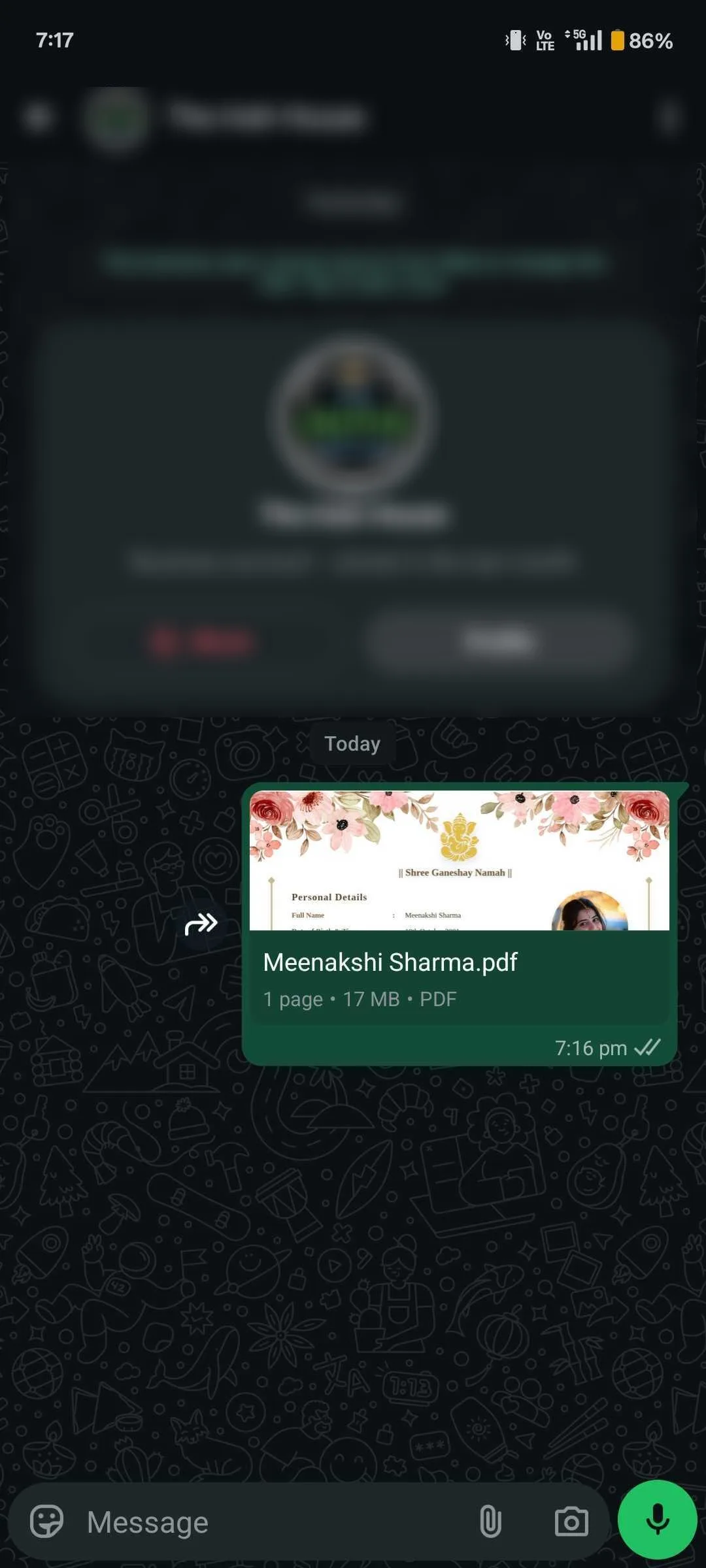
The medium of exchange has evolved. A decade ago, families exchanged printed copies during arranged meetings. Today, over 90% of all initial biodata exchanges happen via WhatsApp.
Because of this, the biodata format for WhatsApp must be mobile-friendly. Data shows a massive shift away from Microsoft Word (`.docx`) files because their formatting notoriously breaks when opened on different smartphones. A clean, single-page PDF is the gold standard in 2024.
Furthermore, visual aesthetics matter more than ever. A well-designed biodata signals effort, education, and social standing. Simple, unformatted text documents are increasingly associated with lower effort or lower socio-economic brackets.
7. Income and Complexion: Changing Filters
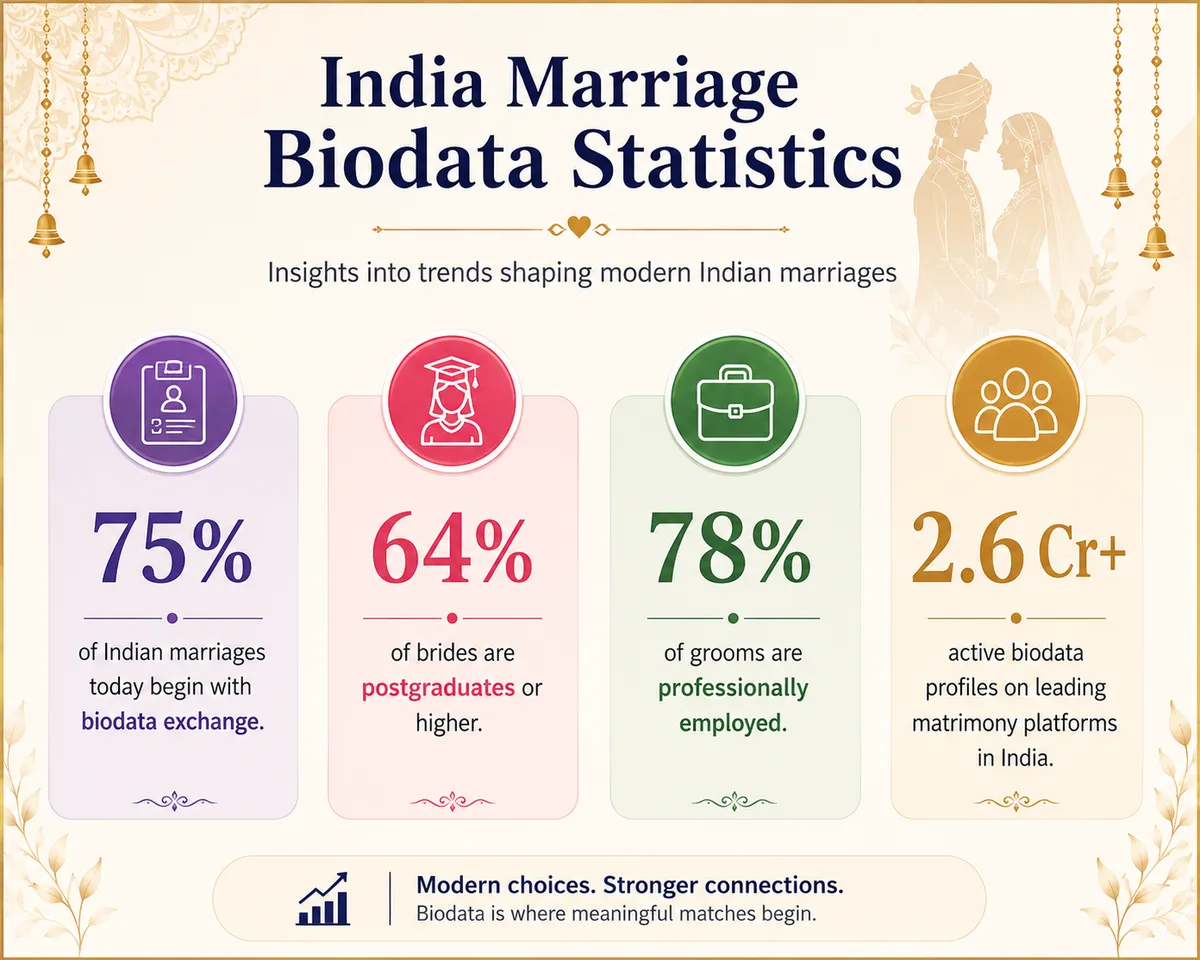
The criteria for selection are shifting, though some traditional expectations remain firmly rooted in the data.
The Income Expectation Gap
Socio-economic expectations remain heavily skewed. Statistics from major matrimonial sites show that women (and their parents) frequently filter for grooms earning at least 30% to 50% more than the bride's current income. Clearly stating exact income is listed as the #1 factor that increases a male profile's response rate.
The Decline of "Complexion"
Historically one of the most prominent filters, the explicit demand for a "fair" partner is slowly declining in urban centres. Consequently, the "Complexion" field is increasingly viewed as optional in modern biodatas, though it remains a common requirement in rural and tier-3 city matchmaking networks. If you are struggling with what to include, read our comprehensive biodata tips to navigate these sensitive fields.
Tired of Using MS Word for Biodatas?
Our builder automatically formats your Biodata into a beautiful, respectful PDF. Choose from premium templates explicitly designed for modern Indians.
Start Building Now8. What This Means For Your Biodata
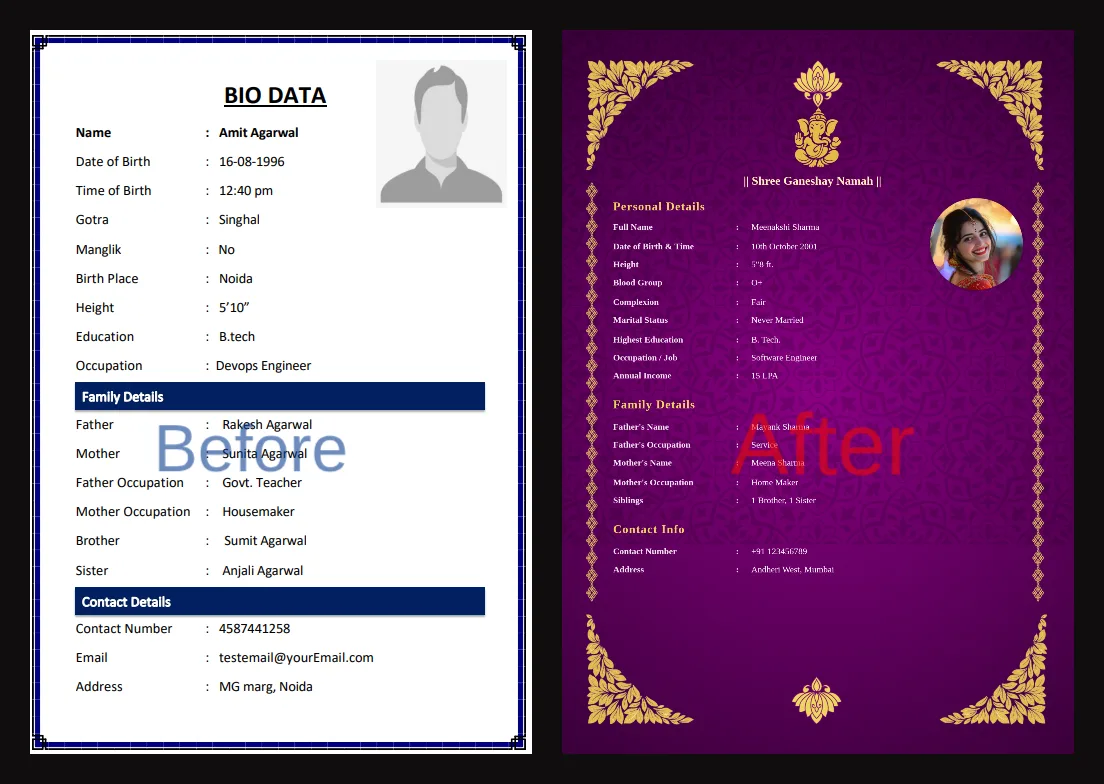
Based on all these statistics, here is a practical checklist to ensure your biodata performs well in the 2024 matrimonial market:
- Is your document saved as a PDF (not a Word doc) for easy WhatsApp sharing?
- Did you include an engaging 'About Me' paragraph (crucial for self-arranged matches)?
- If Hindu, did you clearly list your Date, Time, and Place of birth for Kundali matching?
- Is your income stated clearly? (Highly recommended for grooms).
- Are your photos high-quality, recent, and professionally shot?
- Did you list both your current location and your native place?
- Did you use a modern, clean template rather than a dense text wall?
Important: If you are looking for a biodata format in Hindi, the same principles apply. A clean PDF design transcends language barriers.
9. Frequently Asked Questions
What percentage of marriages in India are arranged?
Recent surveys suggest approximately 85% of marriages in India are still arranged or semi-arranged, meaning the exchange of a biodata remains the cornerstone of matchmaking.
At what age do most Indians create a marriage biodata?
The peak age is 25-28 years for women, and 27-30 years for men. This has shifted upward by about 2 years over the last decade as career focus takes priority.
Is Kundali matching still important in 2024?
Yes, heavily. Data indicates over 65% of Hindu families require Kundali matching before a first meeting, though younger urban demographics treat it as secondary.
What is the most shared format for marriage biodata?
PDF is overwhelmingly the standard. Word formats are strongly discouraged because their layout breaks when opened on different devices via WhatsApp.
Conclusion
The statistics are clear: the arranged marriage system isn't disappearing; it is evolving. By understanding these trends—like the shift towards self-arranged matches and the absolute necessity of mobile-friendly PDF files—you can optimize your own profile for success.
Stop relying on a biodata format in Word that breaks on your phone. Upgrade to a modern, structured format and present your best self to prospective matches.
Ensure Your Biodata Stands Out
With millions of biodatas exchanged every year, a clean, professional design is your best advantage. Create yours for free in under 5 minutes.
Create Biodata FreeWhat to Read Next
Ready to create your biodata?
Use our free builder to make a WhatsApp-ready marriage biodata PDF in minutes.
Open free biodata maker