Rajan Kumar
Founder, BiodataBuilderRajan built BiodataBuilder to help millions of Indians create professional marriage biodatas easily. With expertise in Indian matrimonial traditions and 2M+ biodatas created on the platform, his guides cover every regional format, community custom, and modern best practice.
Last Updated:
Modern vs Traditional Biodata Format: Which Is Right for You?
TL;DR - The Quick Summary
- Match the Medium to the Audience: Use a traditional format for conservative, elder-driven matchmaking. Use a modern format for urban, self-arranged, or NRI contexts.
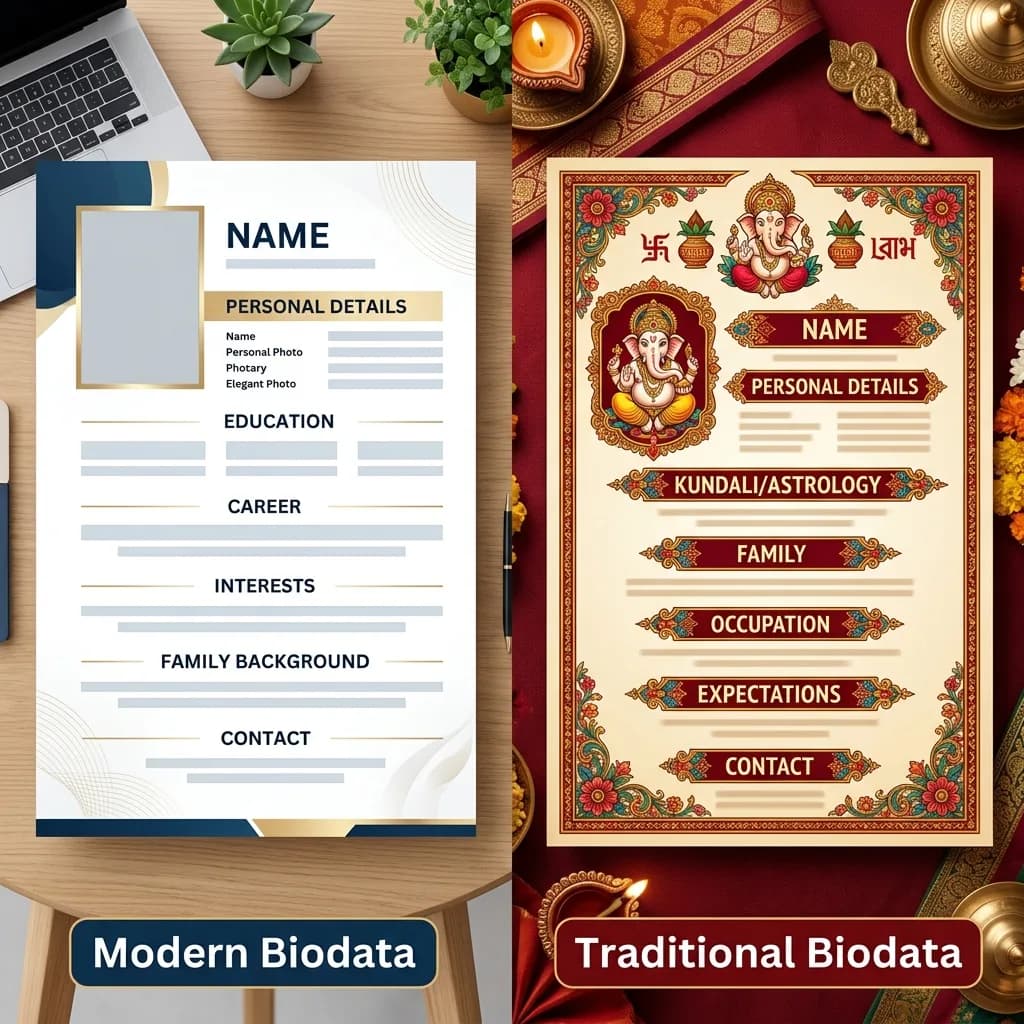
- The Visual Impact: Traditional formats rely on ornate borders, rich colors, and religious motifs. Modern formats rely on white space, clean typography, and a resume-like structure.
- The Hybrid Approach Wins: A modern, clean layout that still includes all the traditional astrological and family fields is currently the most successful format in India.
1. The Psychology of Biodata Design
When a family receives a biodata for marriage on WhatsApp, they make their first impression before they even read the name. The design, colors, and layout immediately signal your cultural background, your family's values, and your approach to the marriage process.
According to recent biodata statistics, profiles that mismatch their target audience (e.g., sending a highly informal, modern profile to a deeply conservative family) have a 60% higher rejection rate at the initial screening phase. A traditional layout signals respect for elders and heritage. A modern layout signals education, urban sophistication, and independence. Choosing the right one is critical.
2. The Traditional Biodata Format
A traditional biodata is deeply rooted in community norms. It is often structured like a formal family document rather than an individual resume. The primary audience for a traditional biodata is usually the parents or grandparents, not the prospective bride or groom.
Visual Signifiers
- Auspicious Headers: "Shree Ganeshay Namah", "786", or a Cross icon at the absolute top.
- Color Palette: Deep reds, maroons, saffron, and gold.
- Borders: Floral, mandala, or temple-architecture inspired borders.
- Photography: Formal studio portraits; women often in sarees or traditional wear, men in formal shirts or ethnic wear.
Content Priorities
- Astrology First: Kundali details (Rashi, Nakshatra, Gotra, Time of Birth) are placed prominently near the top.
- Extended Family: Includes names and occupations of grandfathers, maternal uncles (Mama), and native village (Mool).
- Modest Language: Uses highly formal language; avoids "I" statements in favor of third-person or purely factual listings.
3. The Modern Biodata Format
A modern biodata strips away the visual clutter. It draws inspiration from premium job resumes and minimalist web design. The primary audience for a modern biodata is often the prospective bride or groom themselves, rather than just the parents.
Visual Signifiers
- Clean Headlines: Replaces religious icons with a bold, clean headline featuring the candidate's name.
- Color Palette: Neutral tones—whites, grays, navy blues, and muted pastels.
- Borders: Geometric, minimalist borders, or no borders at all (relying on white space).
- Photography: Smart casual or professional lifestyle photos; often taken in a cafe or modern outdoor setting rather than a stiff studio.
Content Priorities
- Personality First: Heavily features an "About Me" paragraph that details hobbies, lifestyle, and direct partner expectations.
- Career Focus: Highlights educational pedigree and professional trajectory prominently.
- Core Family Only: Mentions immediate parents and siblings, skipping the extended ancestral village details.
When should you use this?
A modern format is highly recommended for urban professionals working in metros (Bangalore, Mumbai, NCR), NRI (Non-Resident Indian) matches, or couples engaging in self-arranged marriages. It is also the preferred format if you are creating a second marriage biodata, where maturity and directness are valued over traditional ritualism.
4. Side-by-Side Field Comparison
| Feature | Traditional Biodata | Modern Biodata |
|---|---|---|
| Overall Design Focus | Floral, ornate, warm colors (Red/Gold) | Clean, minimal, neutral tones (Navy/Grey) |
| Religious Elements | Prominent (OM, Swastik, Cross at top) | Subtle or absent |
| Astrological Section | Highly Detailed & Prominent | Brief, Optional, or pushed to the bottom |
| Manglik / Dosha Status | Always explicitly stated | Only stated if requested by the other party |
| Family Section | Extended (Grandparents, Native Village) | Core Family Only (Parents, Siblings) |
| About Me / Hobbies | Rarely included | Highly prominent; written in first-person |
| Language Tone | Formal, respectful, third-person | Conversational, direct, first-person |
| Photo Style | Formal attire, traditional studio backdrop | Smart casual, modern/lifestyle setting |
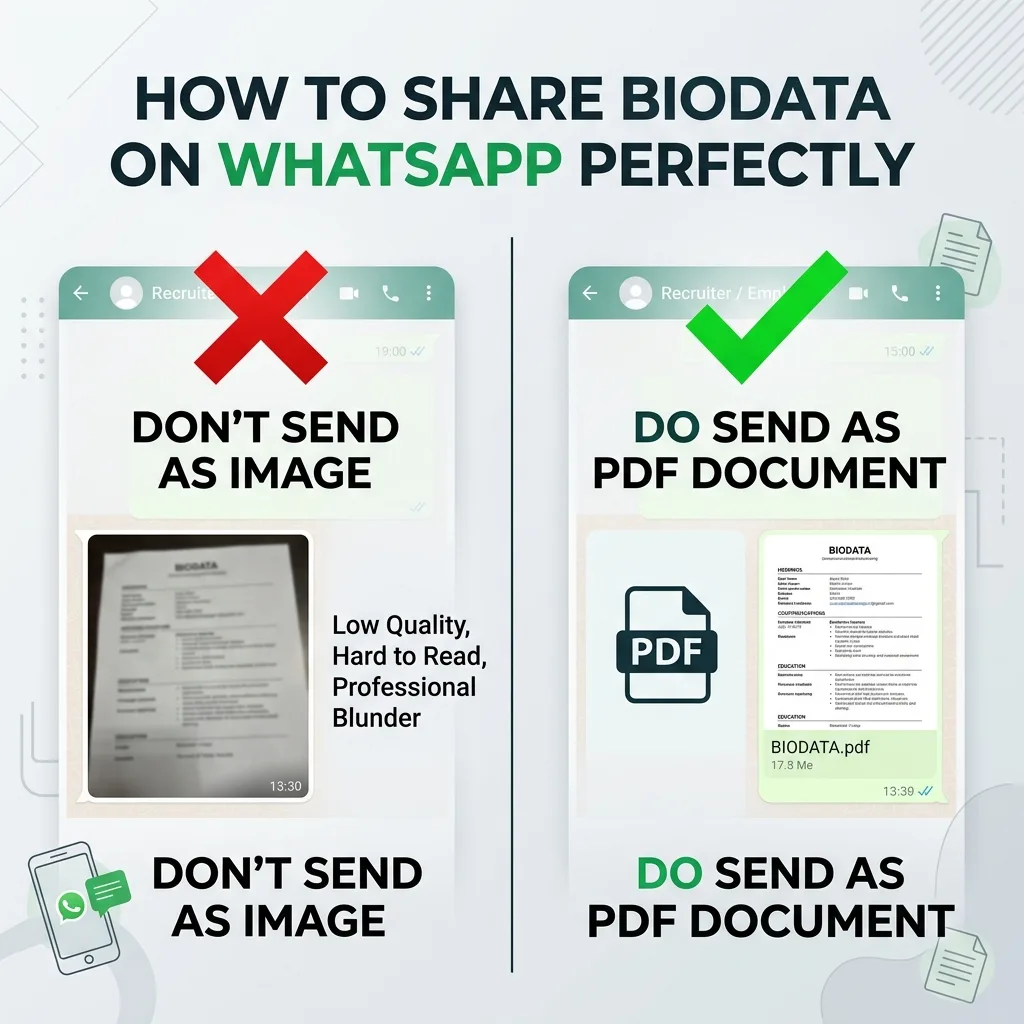
| Sharing Method | Printed copies or formal email | Usually shared directly via WhatsApp PDF |
5. The Hybrid Approach: Best of Both Worlds
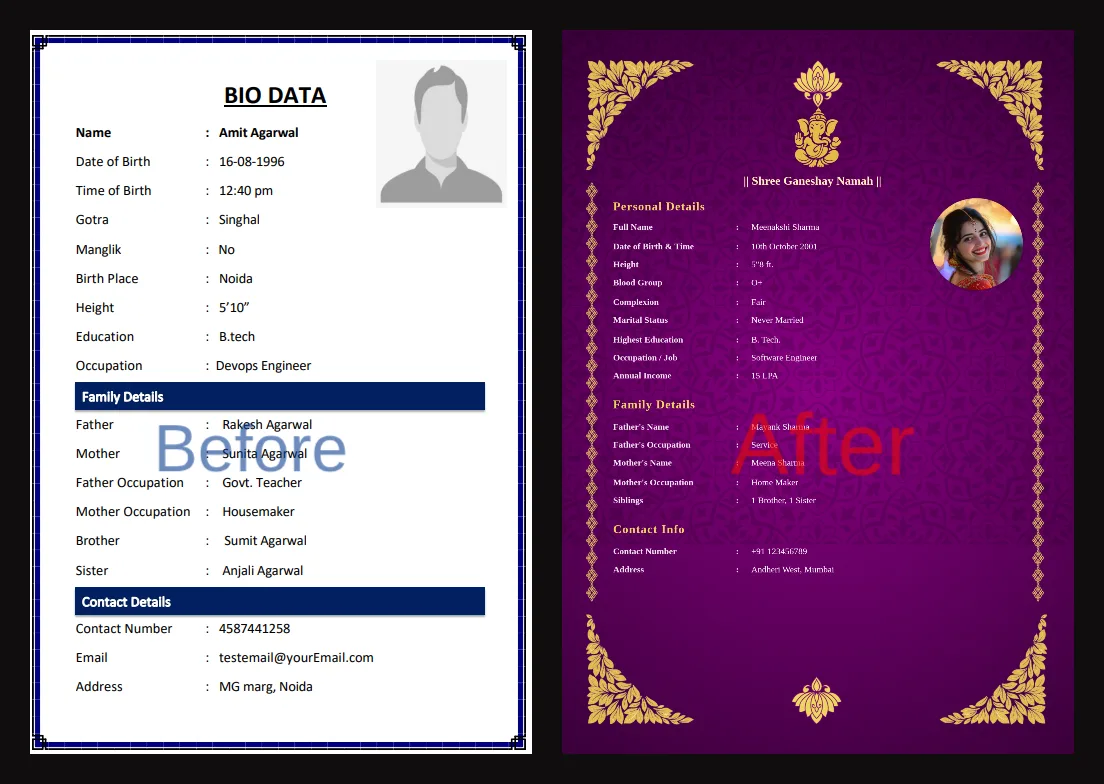
The most successful biodata strategy in today's Indian matchmaking market is a hybrid format. A hybrid biodata utilizes a sleek, modern visual design but actively retains all the critical traditional information that families need to make decisions.
Why does the hybrid format work? Because it appeals to both generations. It shows the parents that you respect their need for cultural filters (like checking Manglik status or Gothram), while simultaneously showing the prospective partner that you have modern aesthetic sensibilities and a distinct personality.
The Secret: Typography and Whitespace
The primary visual distinction in a hybrid format lies in the use of modern typography and whitespace. Instead of using ancient, difficult-to-read fonts like Times New Roman in a dense block of text, a hybrid approach utilizes crisp sans-serif fonts (like Inter or Roboto) to ensure maximum readability on mobile devices. Furthermore, by increasing line height and adding generous padding between sections, the document feels premium and sophisticated rather than cramped and chaotic. This small change in design philosophy signals a high-status profile without needing to delete any of the traditional family background information that elders expect.
How to Build a Hybrid Biodata
- Choose a clean, minimalist template with lots of white space.
- Ensure there is still a dedicated block for Kundali/Astrology details.
- Include a well-written "About Me" paragraph.
- Export it as a high-quality PDF, avoiding messy Word document downloads that lose their formatting on mobile phones.
(Note: Almost all templates available on BiodataBuilder follow this optimized hybrid structure by default).
For more actionable advice on drafting the actual content, check out our 15 expert biodata tips.
6. Frequently Asked Questions
What is a traditional biodata format?
A traditional biodata uses warm, ornate design elements — floral borders, religious symbols, formal hierarchy, and a complete astrological section. Best suited for religious communities and tier-2/3 city families.
What is a modern biodata format?
A modern biodata has a clean, minimal design similar to a premium resume. It highlights individual achievements and may abbreviate or skip astrological details. Best for urban professionals and NRI contexts.
Should I use a modern or traditional biodata?
Choose based on your audience. A hybrid approach — modern layout with all traditional information still included — works best in most contexts. It appears polished while meeting cultural expectations.
Can I include astrological details in a modern biodata?
Yes, and you should if your community expects them. A modern design does not mean you skip cultural information — it means you present that information in a cleaner, more readable format.
Conclusion
The debate between a modern and traditional biodata format is not about which design is "better"—it is entirely about matching your presentation to your audience. Traditional families expect to see respect for heritage and astrology upfront, while modern professionals appreciate a clean, direct approach that focuses on personality and career.
By adopting a hybrid approach, you can create a beautiful, modern document that still respects cultural expectations. Take the time to understand who will be reading your biodata, and choose a layout that speaks their language.
Browse Traditional & Modern Templates
Preview every template live before committing. Whether you want a clean modern layout or an ornate traditional one, find the one that fits your context perfectly — free.
Explore Templates FreeWhat to Read Next
Ready to create your biodata?
Use our free builder to make a WhatsApp-ready marriage biodata PDF in minutes.
Open free biodata maker